01
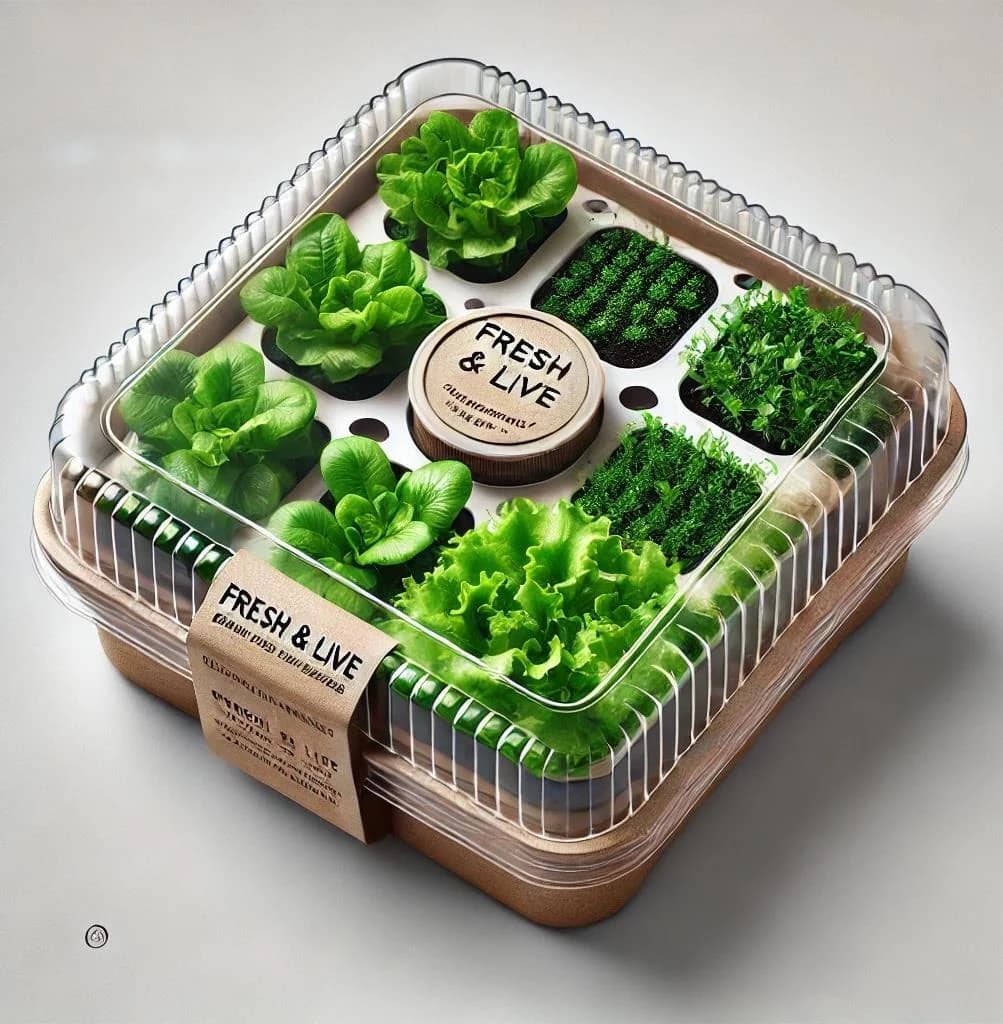
Living produce
Fresh & Live
A fresh-produce concept, delivered as living plants.
Root-intact salad plants, with growing, packaging, and delivery developed together. Our first focus for practical pilot conversations.
Explore Fresh & Live
The Sustainable Ag Company
TSAC develops climate-resilient crop programs by connecting crop biology, controlled trials, data-driven decisions, genetics, and commercial partnerships. TSAC connects crop science, technology, and commercial expertise to turn a defined agricultural challenge into a practical development program. We select the crop, system, and technology to fit the outcome.

Where we are focusing
From root-intact produce to crop-specific Gene Editing pathways, each initiative starts with a defined question and is shaped by scientific testing and practical needs.
Living produce
Fresh & Live
Root-intact salad plants, with growing, packaging, and delivery developed together. Our first focus for practical pilot conversations.
Explore Fresh & LiveCrop improvement
Gene Editing
Crop-specific genetics pathways that start with a defined trait question and advance through scientific, regulatory, and commercial gates.
Explore Gene EditingIntegrated crop development
TSAC is building a crop-development model that begins with a defined crop or partner decision. Programs connect biology, controlled trials, environmental and phenotype data, improvement pathways, and commercial planning so each stage informs what happens next.
Starting point
Defined crop or partner decisionA measurable technical or commercial question.Decision gate
Evidence-led next stageEach stage informs what happens next.A disciplined learning loop
A structured development loop keeps technical work tied to a measurable question, a clear evidence gate, and a practical route forward.
Step 1
DefineClarify the crop, trait, quality, production, or supply challenge.Step 2
DesignSet the germplasm, treatment, environment, measurement plan, and decision criteria.Step 3
RunConduct controlled trials and capture plant and environmental observations.Step 4
LearnCompare outcomes, identify signals, and update protocols or models.Step 5
SelectAdvance the crops, traits, and pathways that meet defined gates.Step 6
CommercializeConnect evidence to services, production, propagation, partnerships, or licensing where appropriate.Connected capabilities
TSAC brings together the capabilities needed to move a crop-development question from concept to evidence and from evidence to a commercial decision.
Define the crop target, germplasm, trait, quality, production, and partner requirements.
Create repeatable trial conditions and stage-gated evidence for crop and protocol decisions.
Connect environmental and phenotype observations to selection, protocol, and model updates.
Use crop-specific breeding and genetics pathways to advance selected traits and programs.
Evaluate targeted crop-improvement pathways where scientifically, commercially, and regulatorily appropriate.
Connect customer needs, partner roles, rights, operating assumptions, and routes to value.
Program portfolio
The portfolio is designed to expand only as technical evidence, partner demand, and funding support justify the next stage.
Horizon 1
Horizon 2
Horizon 3
Who should engage
For partners
TSAC connects program scope, controlled proof, partner roles, rights, and a commercial gate. The pathway can support agrifood, genetics, planting-material, controlled-environment, production, corporate R&D, and research teams.
For investors
Follow evidence gates and longer-term crop-program optionality. The review centers on partner-defined work, controlled proof, partner-enabled execution, compounding crop intelligence, and strategic genetics.
Program learning
When evidence and rights are structured well, a crop program can add reusable protocols, linked datasets, decision rules, operating know-how, and commercial learning. Those assets can improve how future programs are designed and evaluated.
01
ProtocolsReusable ways to design and run the work.02
Linked datasetsPlant and environmental observations in context.03
Decision rulesClear criteria for evaluating the next step.04
Rights and know-howStructured rights, operating know-how, and commercial learning.05
Stronger programsBetter-informed design and evaluation of future programs.Leadership
Deepak Sehgal, PhD
Co-founder & CEO
Leads company building, partnerships, and program governance.
Tanveer Khan, PhD
Co-founder & Chief Scientific Officer
Leads crop science, genetics, and technical development.
Steve Gereb
Global Managing Director
Leads global operations, partner ecosystems and strategic relationships that turn agricultural innovation into practical, scalable solutions.
Begin with a defined question
Discuss a crop-development program, strategic partnership, scientific collaboration, or investor conversation.